IoT Talks Milan 2026
3 NovemberTBA, Milano, Italy
CONFERENCE
Everything you’ll ever need to manage your IoT connectivity

Curious about IoT? We’ve got you covered

You are #1 We are Tele2
We are very proud to be ranked #37 in TIME's World's Most Sustainable Companies

Last update
August 19, 2026
Published
July 13, 2026
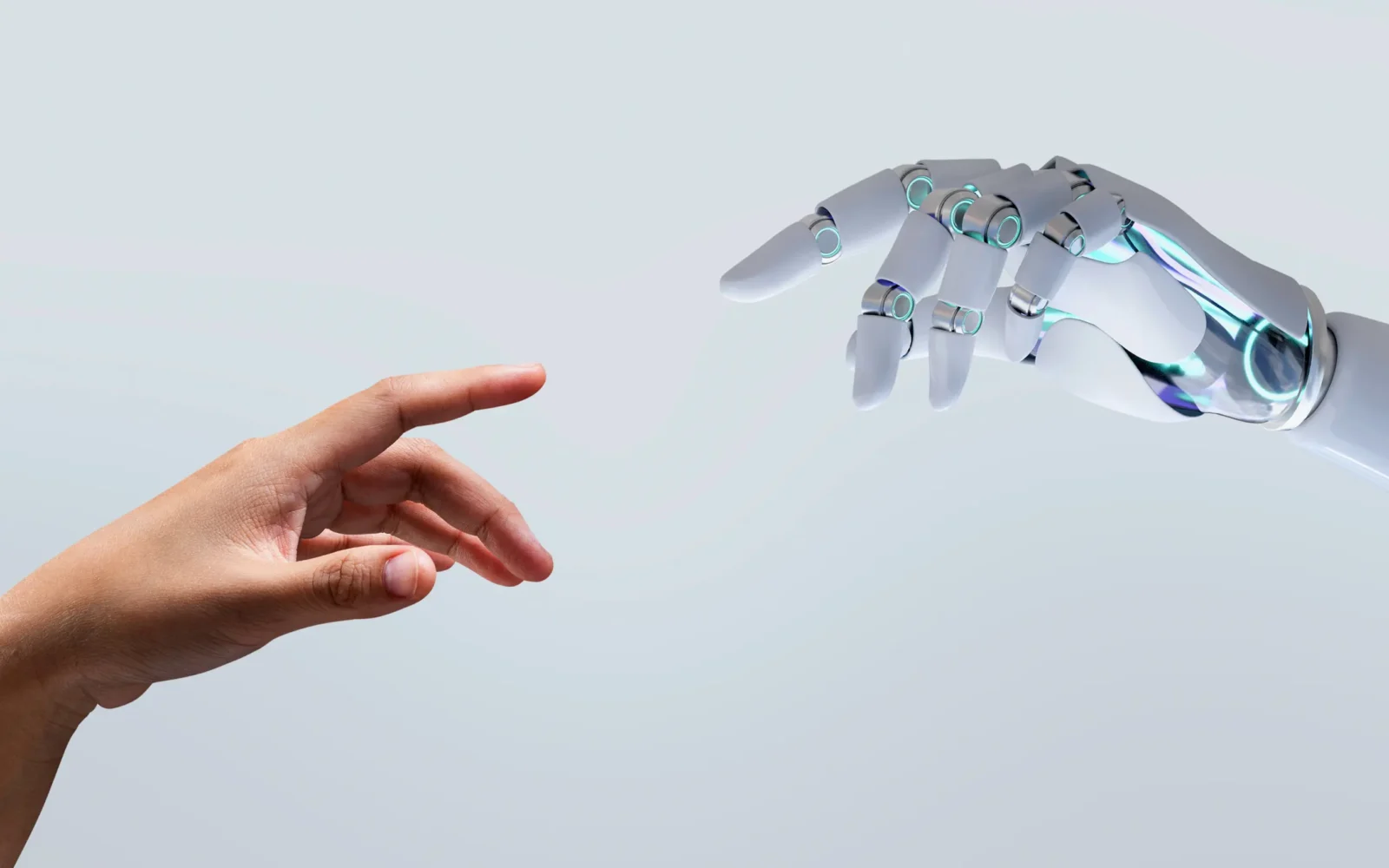
Self-driving cars, humanoid robots, and AI-managed cities are physical AI (physical artificial intelligence) in action — and every one of them depends on a network that most AI conversations ignore.
Every self-driving car, humanoid robot, and AI-managed city depends on a network. Here’s why that network has never mattered more — and what’s at stake if it fails.
When people talk about AI, they talk about models, training data, and compute. Rarely mentioned is what makes AI useful in the physical world: connectivity. A self-driving car with no network is an expensive object that doesn’t know where it is. A robot with no connectivity is expensive hardware waiting for instructions. A smart city sensor with no network is just a sensor.
As AI moves from software into the physical world — what the industry calls physical AI — connectivity shifts from a utility to a critical resource. The connection matters as much as the intelligence. And physical AI’s demands on that connection are unlike anything IoT connectivity has handled before.
This was a central theme at the Tele2 IoT Talks Paris event in June 2026, where connectivity providers, platform partners, and customers examined what the physical AI era actually requires from the network layer.
The scale difference is instructive. A traditional IoT device, such as a smart meter, a fleet tracking unit, an industrial sensor, uses between 5 and 10 megabytes of data per month. A humanoid robot uses terabytes. That is not a modest increase. It is a change of several orders of magnitude in what the network needs to carry.
The transition is already underway. Automotive is currently the dominant vertical on the Cisco IoT Control Center platform, the technology behind Tele2 IoT’s connectivity management platform — with over 140 million connected vehicles managed globally.
A connected vehicle, sending telematics data, receiving over-the-air software updates, and running AI assistance systems, already demands far more from the network than a simple tracker did. Robots will demand more again.
At the Tele2 IoT Talks Paris event, Gianni Uglietti, representing Idemia Secure Transactions — Tele2 IoT’s SIM technology partner managing connectivity for more than 80 million vehicles globally — described what software-defined vehicles require from the connectivity layer.
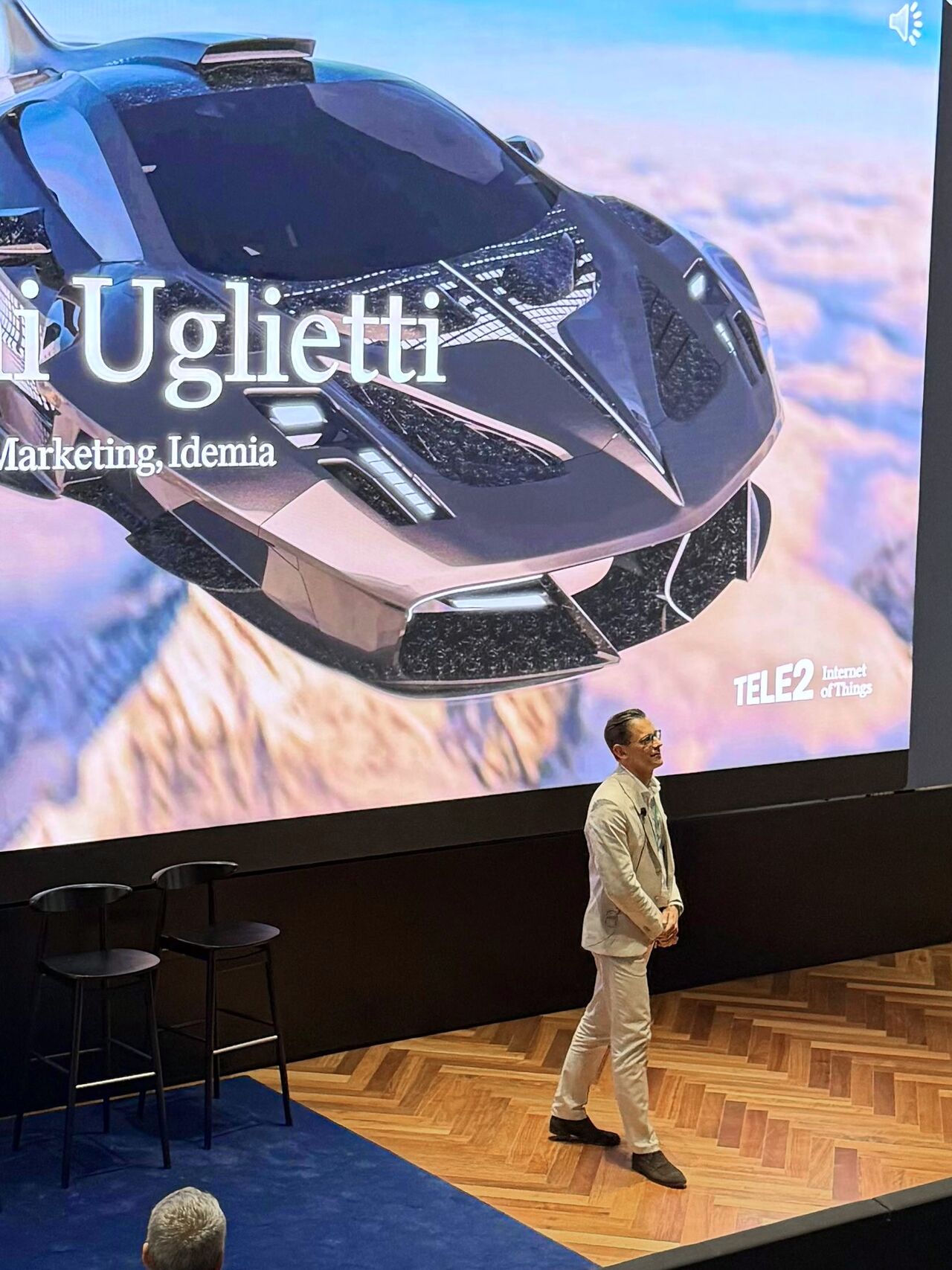
A connected car is something that carmakers ship. A software-defined vehicle is something that carmakers must maintain and operate — not for two years, not for five years, but for more than 15 years. And that dramatically changes what connectivity must deliver.
He framed the requirement across three dimensions:
Current eSIM architectures meet the first requirement reasonably well. The industry is actively redesigning to meet all three.
One of the more confronting topics at the Tele2 IoT Talks Paris event was the quantum computing threat to vehicle connectivity.
Current encryption standards — protecting eSIM communications, vehicle-to-cloud connections, and authentication — can be broken by sufficiently powerful quantum computers. Those computers don’t exist at scale today, but their development is accelerating, and the timeline is only shortening.
This is what I call the one billion-dollar time bomb. Carmakers face recalls, liability, class actions, and revenue risk if the encryption protecting vehicles already on the road becomes obsolete before those vehicles are retired.
Google and Apple are already pushing the automotive industry to treat 2029 — not 2035 the timeline defined by NIST – as the quantum migration deadline. For a carmaker designing a vehicle today that stays on the road until 2042, that’s an engineering decision to make now.
Tele2 IoT and Idemia Secure Transactions unveiled the first quantum-safe IFPP (In-Factory Profile Provisioning) solution at Mobile World Congress Barcelona earlier this year — a deployable technology already available for OEM trials, letting carriers deliver quantum-secured connectivity profiles directly into the vehicle manufacturing line.
For IoT deployments beyond the reach of cellular networks – remote operations, disaster response, open-ocean logistics – satellite connectivity is no longer a fallback. It’s becoming a planned layer of the connectivity stack.
At the Tele2 IoT Talks Paris event, Simon Glassman of Skylo, a global non-terrestrial network (NTN) service provider extending mobile networks beyond terrestrial coverage using 3GPP standards, and operator partner of Tele2 IoT in Europe — described the shift from satellite as a backup to a future where terrestrial and satellite connectivity are seamlessly integrated and invisible to the device.
Looking further ahead, some in the industry see future LEO satellite architectures enabling on-orbit data processing – reducing the need to route data through ground stations. If realized, that latency reduction could have direct safety implications for emergency services and critical infrastructure in remote areas.
At Tele2 IoT Talks Paris, Julien Davy representing ZEborne – which manages around 8,000 electric vehicle (EV) charging stations across France and Benelux – introduced a use case that illustrates how IoT, AI, and connectivity interact at a systems level: vehicle-to-grid (V2G).
The concept uses EV batteries parked at charging stations as distributed energy storage for the grid, absorbing excess renewable energy when supply is high and returning it when demand peaks.
Managing this at scale, across hundreds of thousands of vehicles with different charge states and usage patterns, requires AI to orchestrate the flows and reliable IoT connectivity to coordinate the devices in real time. The connectivity layer is what makes this possible.
At Tele2 IoT Talks Paris, Cisco’s VP of Mobility Products Darin Kaufman shared his vision for where connectivity is heading.

I think we’ll be talking about the intelligence of things — and that intelligence will be distributed, without border, enabled by ubiquitous connectivity that becomes digital air. Everybody will breathe it. No matter where you are in the world, and no matter who you are in the world, you’re going to be connected.
That future is being built now through the infrastructure decisions, eSIM architectures, quantum-safe security layers, and satellite integrations being designed by partnerships like those on display at the Tele2 IoT Talks Paris event. The network is not the interesting part of the story. But without it, none of the interesting parts work.
Ready to simplify your IoT connectivity? Talk to a Tele2 IoT expert and find out how we can support your next deployment. Get in touch.

White Paper
Tele2 IoT × Droople
Case study