IoT Talks Milan 2026
3 NovemberTBA, Milano, Italy
CONFERENCE
Everything you’ll ever need to manage your IoT connectivity

Curious about IoT? We’ve got you covered

You are #1 We are Tele2
We are very proud to be ranked #37 in TIME's World's Most Sustainable Companies


Industry
Smart Cities
Region
Sweden
Sensative, the Swedish smart-building and smart-city platform company behind Yggio, is bringing Tele2 IoT in as a connectivity partner for the cellular side of its deployments, alongside the LoRaWAN sensor network at the core of its business.
The relationship began as a search for a new enterprise IoT SIM provider, after Sensative’s previous supplier was acquired and shifted its focus away from smaller accounts.
It has since grown into a broader conversation about supporting Sensative’s expansion beyond Sweden, as cellular IoT standards like NB-IoT and LTE-M become a bigger part of how Sensative connects sensors its own LoRaWAN network can’t reach.

“What attracted me in talking to Tele2 IoT is that Tele2 IoT is much more than a SIM card provider. Tele2 IoT could be a partner for us in a totally different way, both in our home market and as we move from Scandinavia out into the world.”
Sensative’s ambition, in its co-founder’s own words, is to give buildings and cities an open operating layer the way Android gave phones one: a standard any device or vendor can connect to, instead of a closed system that locks customers into one supplier’s hardware and data.
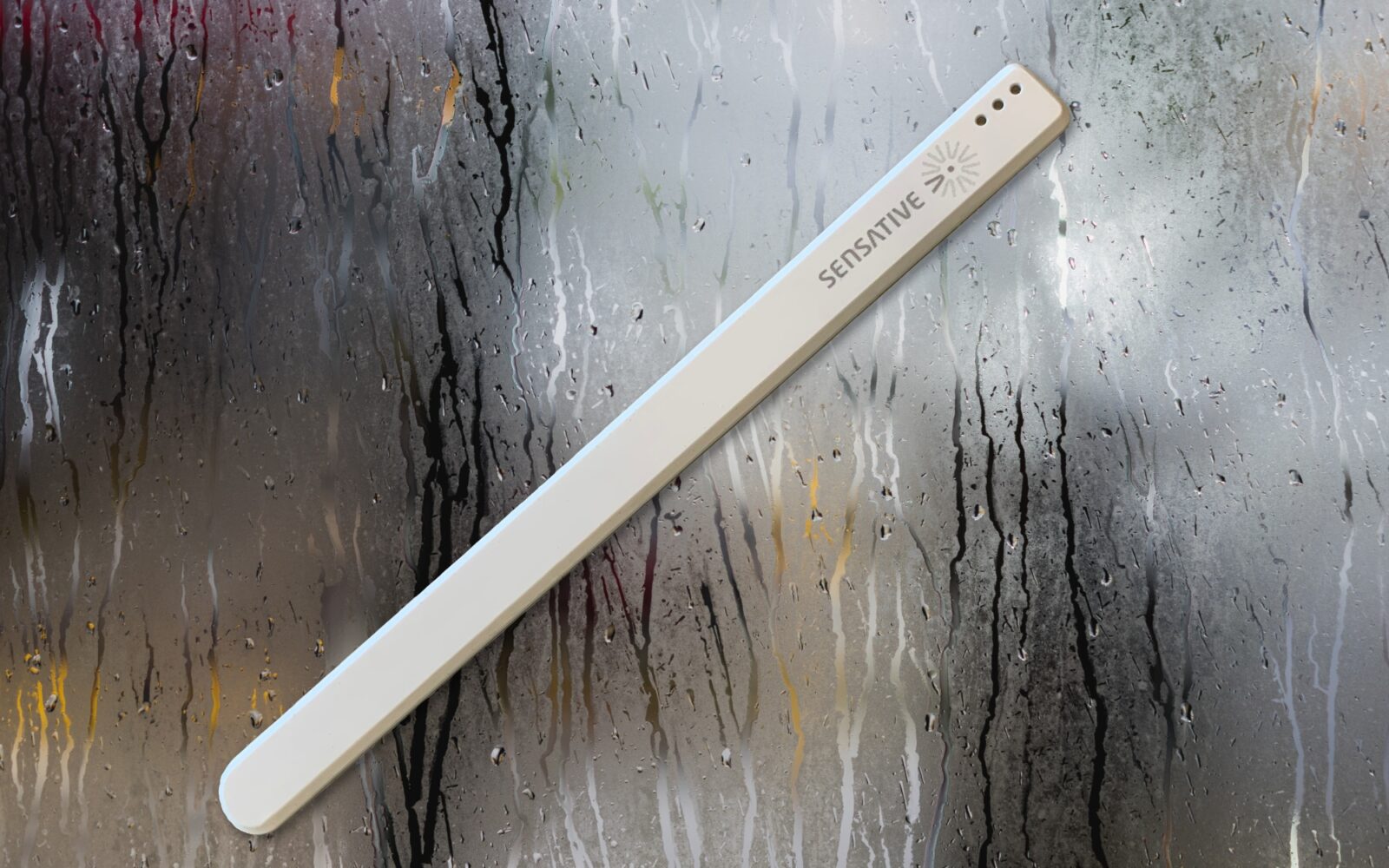
The company was founded in 2013 on a narrower insight first: the magnetic door-and-window sensor used in alarms and smart homes hadn’t been redesigned in twenty years. Sensative’s founders re-engineered it into something thin enough to hide inside a door or window frame: Strips, the sensor line Sensative still builds today on LoRaWAN and Z-Wave, for smart buildings, smart cities, and smart homes.
Yggio itself is an open, multi-tenant platform: it connects to any device on any network, runs a rule engine and AI on top of the data, and can be deployed in the cloud, on-premises, or at the edge, with EU data residency built in.
The platform ambition has roots in the mobile phone industry, where co-founder Mats Pettersson spent 25 years before Android and iOS opened up what had been a closed, vertically integrated market. That experience convinced him cities and buildings needed the same kind of open standard.
“Why shouldn’t we be able to develop the Android for buildings and cities?”
That question became Yggio, Sensative’s open IoT integration platform, built so cities, building owners, and energy companies keep ownership of their own data, rather than handing it to a single vendor’s walled garden.
Sensative’s sensor deployments still run mainly on LoRaWAN, the network its own Strips sensors are built for. Two separate pressures pushed the company to look for a broader connectivity partner.
The first was growth in cellular IoT itself. NB-IoT and LTE-M devices are becoming cheaper and less power-hungry, and Sensative expects cellular connectivity to keep gaining ground even in Sweden, a market where LoRaWAN has dominated.
“What we do see now is NB-IoT, and cellular IoT more generally, becoming much less power-hungry. We can run devices for a long time on a single battery, and the cost is coming down too, both the chipset and the monthly fee. I think we’re going to start seeing cellular IoT regain market share, even here in Sweden.”
The second, more immediate pressure was supplier risk. Sensative’s existing SIM provider, a smaller player early to market with low-cost global SIM cards, was acquired by a larger company that shifted its focus to its biggest accounts.
With more than a hundred SIM cards already active across customer sites, Sensative needed a new partnership.
“What attracted me in talking to Tele2 IoT is that Tele2 IoT is much more than a SIM card provider.”
Sensative was weighing three things when selecting an IoT connectivity partner:
Cellular IoT connectivity from Tele2 IoT doesn’t replace Sensative’s LoRaWAN network, which still carries the bulk of its sensors and is built for years of battery life and deep indoor reach.
Tele2 IoT covers two jobs today: backhaul for LoRaWAN gateways over standard 4G/5G, and direct cellular connections for outdoor people counters deployed across cities.
Sensative expects NB-IoT and LTE-M to take on more of the remaining jobs as cellular IoT matures: stationary sensors in places LoRaWAN can’t reliably reach, and asset tracking that needs to move freely across a city or wider area.
Key connectivity technologies used:
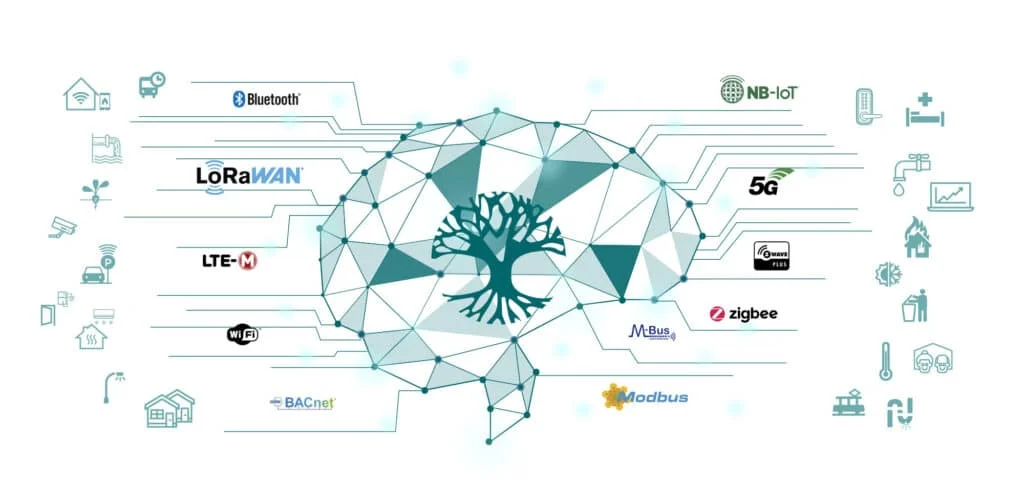
Yggio already has an unusual reach in Sensative’s home market. By the company’s own account, a majority of the Swedish cities that have adopted an IoT platform at all have chosen Sensative’s.
Most smart city deployments start small and scale slowly: Sensative describes a multi-year learning period before a municipality is confident enough to commit to a larger rollout. Two of its city customers, Stockholm and Malmö, are at that point now, moving into larger-scale projects.
The case Sensative makes for Yggio isn’t built on a single efficiency metric. It’s built on who ends up owning the data.
“A key value for us is to deliver not a service, but the ability for our customers to take ownership, sovereignty, and become data driven. That’s very different from more traditional suppliers, who provide a service and then try to keep the data, monetise it themselves, and lock the customer in. We want to empower the customer instead.”
Sensative’s broader argument is about interoperability. In the company’s view, the real blocker across the industry isn’t a shortage of sensors or data, it’s data locked into incompatible formats and platforms nobody can leave.
That fragmentation doesn’t just limit analytics: it limits what AI can do with the data too, since an AI system built on poor, poorly structured data can only produce poor output.
Sensative’s ambition for Yggio goes well past its own sensor line.
The goal is for the platform to become the operating layer for city digitalisation broadly: not just connecting Sensative’s own devices, but giving building owners, energy companies, and every other system a city depends on a shared, interoperable foundation, with the data staying in the city’s own control rather than any single vendor’s.
Future goals include:
“My bold vision is for our platform to become the operating layer for city digitalisation, enabling not just the city, but the building owners, the energy companies, everyone, to become data driven and in control of their own data.”
Sensative built its platform on the belief that open, horizontal standards outlast closed, vertical ones. Its growing partnership with Tele2 IoT, still early but expanding beyond a simple SIM swap, is the next test of that belief, applied to connectivity itself.
“Tele2 IoT keeps the devices connected, Yggio acts on the data. Together we can take customers from pilot to city-wide scale with one partnership” says Mats Petersson.
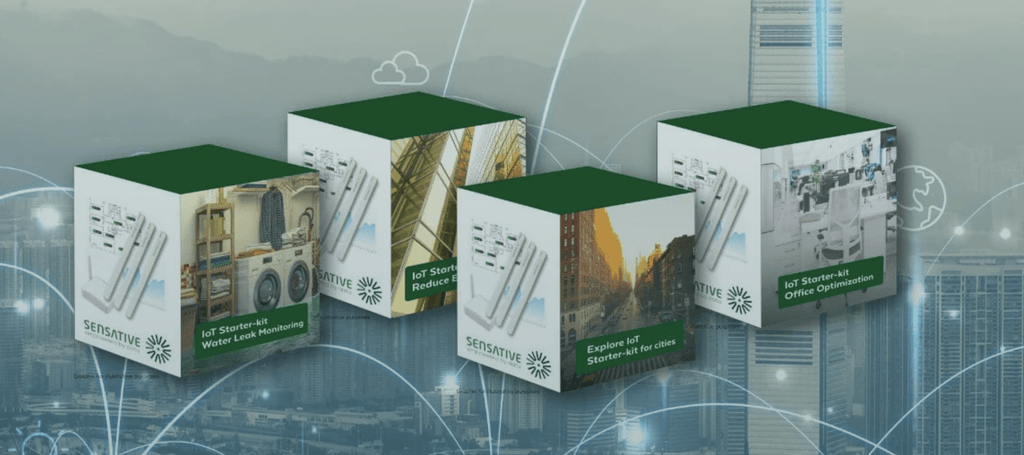
Ready to connect your smart city or building platform with Tele2 IoT? Contact our team to explore global connectivity options.

White Paper
Tele2 IoT × Droople
Case study