IoT Talks Milan 2026
2 NovemberCisco Office, Piazza Gae Aulenti, 6, Milano, Italy
CONFERENCE
Everything you’ll ever need to manage your IoT connectivity

Curious about IoT? We’ve got you covered

You are #1 We are Tele2
We are very proud to be ranked #37 in TIME's World's Most Sustainable Companies

Published
September 15, 2026
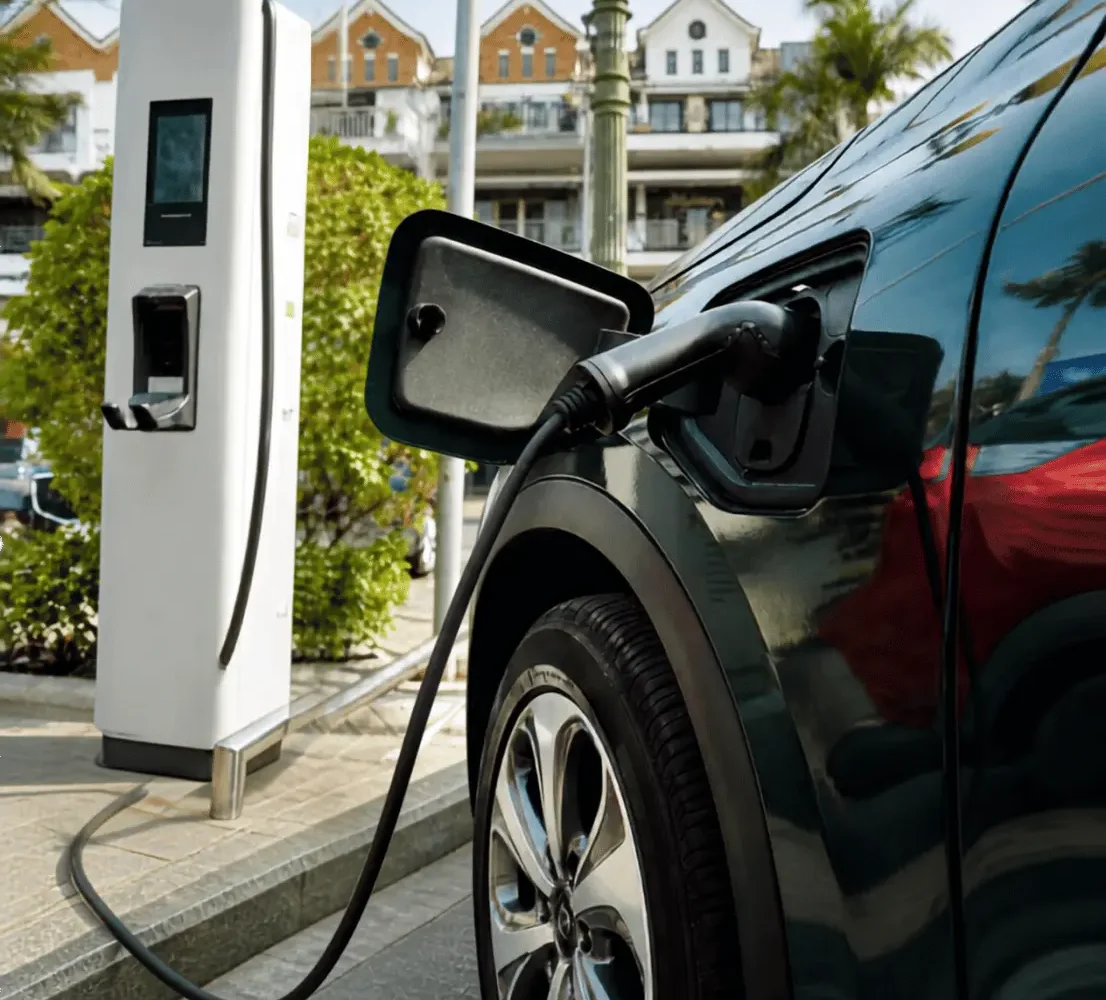
8,000 electric vehicle (EV) charging stations, one connectivity requirement: a network resilient enough to keep working no matter what technology it has to switch to next.
EV adoption gets discussed as a hardware story — batteries, range, charging speed. What rarely gets mentioned is that every EV charging station is also an IoT device, and the industry running those devices is still working out what reliable connectivity for them actually requires.
At the Tele2 IoT Talks Paris event on June 17, 2026, Julien Davy representing ZEborne, which has spent ten years installing and operating EV charging stations, now supervising around 8,000 of them across France and Benelux put a number on the scale of the problem: publicly accessible EV charging sessions across Europe run to roughly 1.5 million, and that’s without counting private and at-home charging.
At the event, Julien put it simply: “The question of the connectivity and communication of this device with our own system is very key to us, and it’s very important to have a partner to help us on that.”
That’s a deceptively simple statement with a demanding requirement behind it: a charging station has to reliably report the data behind every session — usage, faults, availability — across thousands of physical locations, on whatever network technology happens to be available at each one.
When ZEborne expanded operations into French overseas territories, that requirement stopped being theoretical; multi-network connectivity that adapts location by location is what made the expansion workable at all.
Julien’s take on AI in EV charging is more cautious than the industry’s default enthusiasm and that caution is informative.
“We are absolutely not in the anti-AI position,” he said, “but we are cautious, for I think one very good reason: right now the EV charging industry is still very young and has yet to reach its maturity. It would be audacious right now to dig directly into AI knowing that our field of expertise is not yet mature, and this new field is not yet mature either.”
Where he does see near-term value is pattern recognition on low-signal sensor data — the same instinct an experienced field technician builds over years, spotting the subtle signs that something is about to fail before it does.
“AI can catch every low signal and put out a scenario before it happens, being able to answer it right away,” he said. That’s a narrower, more specific claim than “AI will run the grid” — and a useful reminder that EV charging connectivity has to be reliable before any AI layer built on top of it means anything.
Vehicle-to-grid technology is the development Julien expects to reshape what’s required from EV charging connectivity.
Using parked EV batteries as distributed energy storage, absorbing renewable power when supply is high and returning it to the grid when demand peaks. “Every vehicle on the grid is a little battery you can use if the network needs electricity,” as he put it.
Managing that at scale across a fleet of vehicles with different charge states, locations, and availability windows is, in his own assessment, exactly the kind of coordination problem AI is suited to solve, once the underlying connectivity is reliable enough to support it in real time.
Learn more about managing connectivity at scale in our EV Ecosystem White Paper.
A charging network like ZEborne’s is a preview of a pattern that shows up across every connected-device vertical, including electric vehicle charging.
The value depends entirely on the reliability of the underlying EV charging network, and that requirement only grows as new capabilities — AI pattern recognition today, V2G orchestration tomorrow — get layered on top.
Getting the right IoT connectivity first isn’t a preliminary step before the interesting work starts. It’s the precondition for all of it — which is also why V2G’s real bottleneck won’t be the batteries or the grid software. It’ll be whether the network underneath can be trusted with a job that important.
If you’re ready to explore EV charging IoT solutions built for reliable, scalable network connectivity, our team is here to help. Get in touch with an EV charging connectivity expert to explore what’s right for your business.

White Paper